
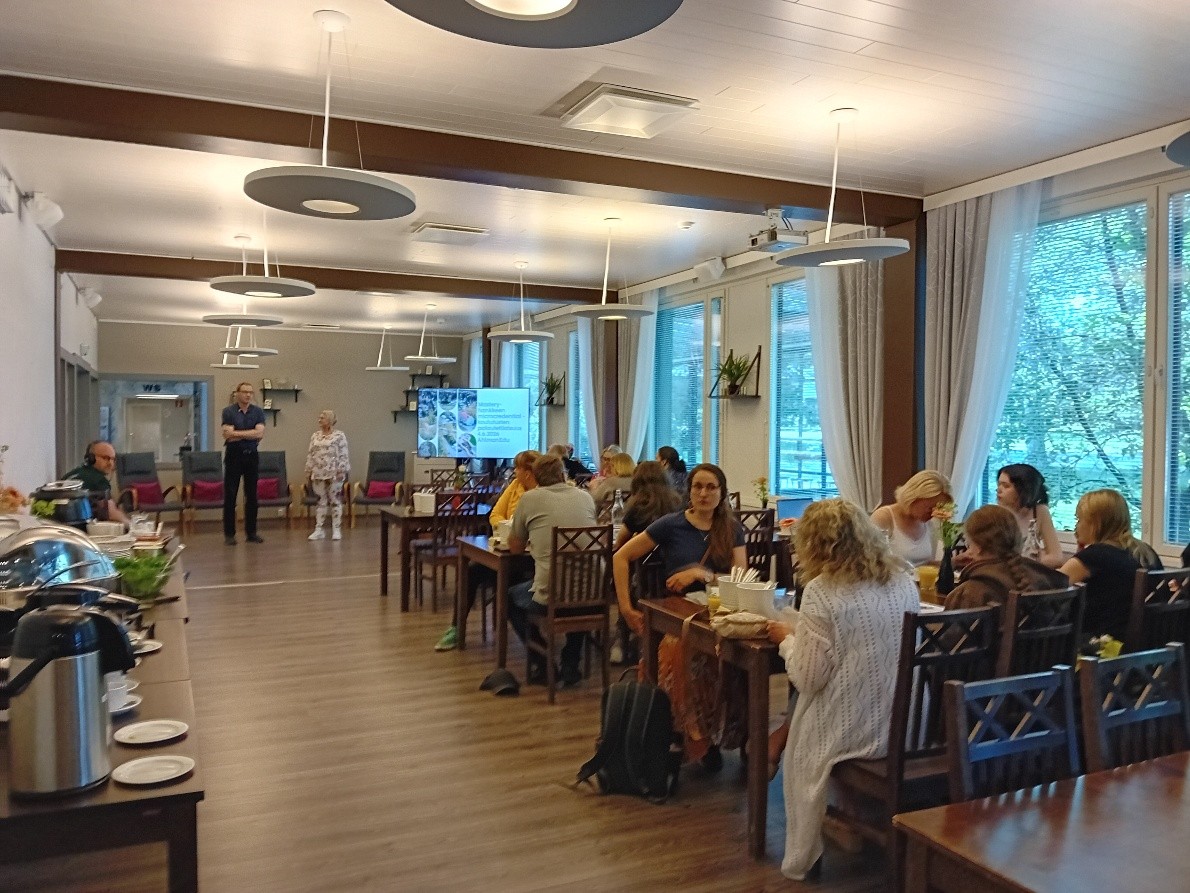
On 4 June 2026, two MASTERY pilot-related events took place in Finland, highlighting the ongoing implementation of the project’s microcredential pathways and the active involvement of learners, educators, training providers and employers in the development of enabling green skills.
The events focused on two MASTERY Green Skills: GS1 – Sustainable Practices in Green Environments and GS9 – Cultivating Green Skills for a Healthy Planet. Both initiatives provided valuable opportunities to gather feedback, exchange experiences and reflect on how microcredentials can support the green transition through innovative and flexible learning approaches.
The feedback event for GS1, titled “Sustainable Practices in Green Environments” and also known in Finnish as “MiniLUMO”, was held onsite at the AhlmanEdu Campus in Tampere.
The event gathered around 20 participants in a welcoming and inspiring learning environment. Students, educators and employers took part in interactive discussions on MASTERY topics, sustainability challenges and pilot experiences.
A key moment of the event was a lively panel discussion, which allowed participants to share different perspectives on the role of green skills in education, work-based learning and professional development. The exchange highlighted the importance of connecting learners, educators and labour market actors when designing effective microcredential pathways.GS9: Cultivating Green Skills for a Healthy Planet
On the same day, the GS9 event, “Cultivating Green Skills for a Healthy Planet”, was organised by the Pyhäjärvi Institute in a hybrid format. Participants joined either onsite at AhlmanEdu Campus in Tampere or online.
The main presentation was delivered by the Finnish Environmental College SYKLI, which also delivered the GS9 microcredential course. The pilot experience received very positive feedback from participants, who appreciated the innovative structure of the course.
The GS9 pathway combined outdoor teaching in natural environments with novel educational approaches, offering valuable insights for both educators and learners. This transversal green skills course demonstrated the potential of learner-centred methodologies to strengthen environmental awareness, sustainability competences and practical engagement with the green transition.
These two Finnish events show how the MASTERY pilot phase continues to generate practical evidence on the design, delivery and evaluation of microcredentials for green skills.
By involving students, educators, training providers and employers, the events contributed to a shared reflection on how short, targeted and quality-assured learning pathways can respond to emerging sustainability challenges.
As pilot activities continue across Europe, MASTERY remains committed to testing innovative training models, collecting feedback from participants and strengthening the role of microcredentials in supporting lifelong learning, employability and sustainable development.