
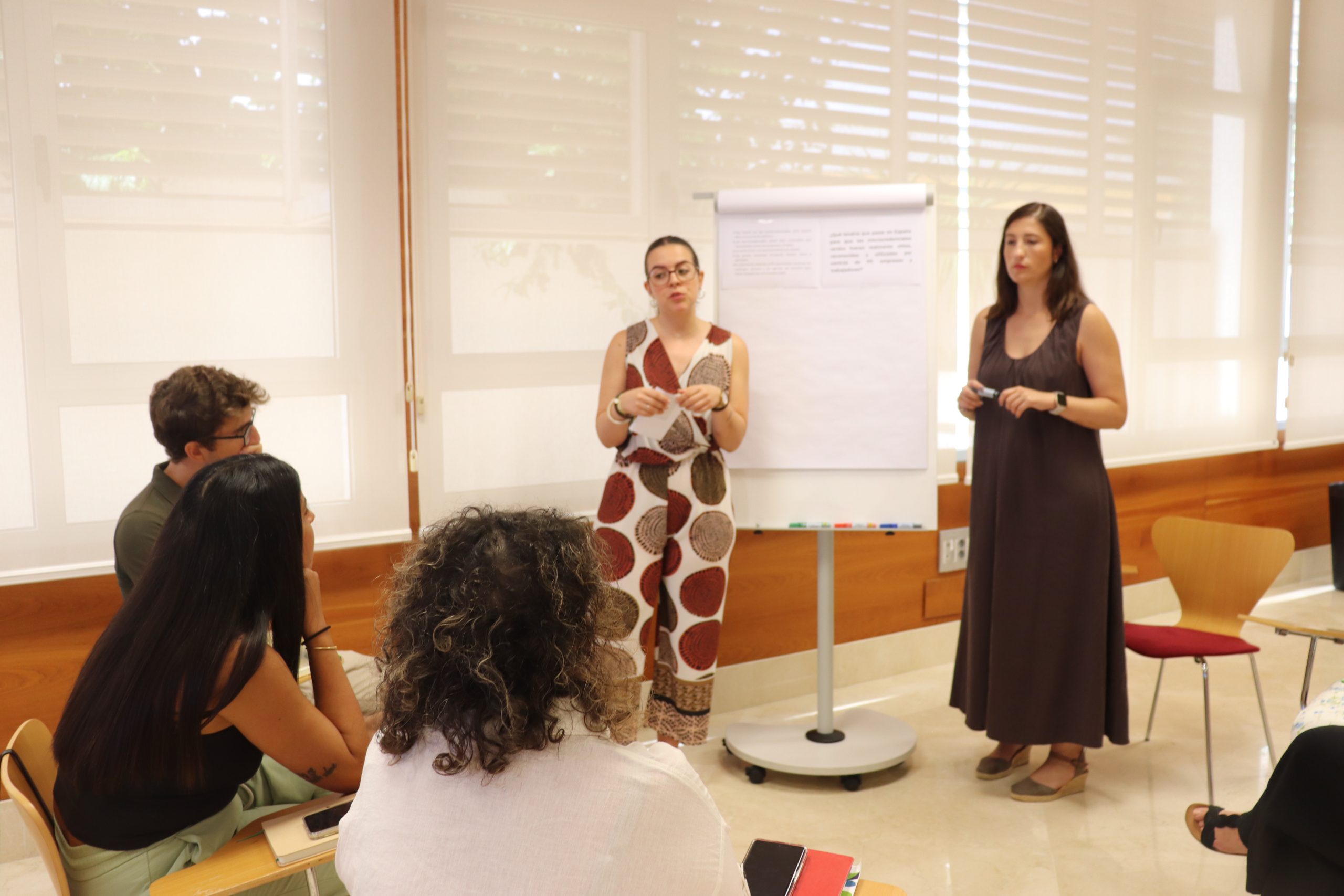
Between June and September 2026, CETEM and AMUEBLA organised three national Kick-start Workshops in Spain as part of Work Package 5 of the MASTERY project. The sessions brought together stakeholders from education, industry, public administration and the labour market to discuss how green skills micro-credentials can become useful, recognised and widely adopted in Spain.
Held on 30 June, 21 July and 10 September, the workshops recorded a total of 32 participations. Representatives of vocational education and training institutions, universities, public authorities, employment services, technology centres, companies, business associations, trade unions and sustainability organisations contributed their perspectives.
This diversity was particularly valuable for examining micro-credentials from different angles: as flexible learning opportunities for individuals, as practical instruments for company upskilling and reskilling, and as qualifications that need to be connected to existing education, training and employment systems.
The first workshop took place online on 30 June and was organised by CETEM with the support of AMUEBLA. Twelve participants explored the current situation of micro-credentials in Spain and reflected on their potential value for learners, workers, companies and education providers.
The discussion showed that there is growing interest in micro-credentials, but that many stakeholders still lack practical knowledge about how they can be developed, delivered, assessed and recognised.
Participants stressed that micro-credentials should respond to clearly identified skills needs and provide short, flexible and directly applicable learning opportunities. This is especially important for SMEs, which often face limitations in terms of time, resources and internal training capacity.
Certification and recognition also emerged as essential conditions. For learners and employers to value micro-credentials, the competences acquired must be transparent, verifiable and connected to credible education and qualification systems.
The second workshop was held face-to-face at CETEM’s facilities on 21 July. Organised by CETEM with the support of AMUEBLA, the session brought together ten representatives from public authorities, education and training, companies, social organisations and other relevant stakeholder groups.
Building on the conclusions of the first workshop, participants discussed what would need to happen for green skills micro-credentials to be genuinely useful, recognised and used by VET providers, companies and workers in Spain.
Several common priorities emerged:
- Strengthening the official recognition of micro-credentials and connecting them with existing national and regional education, training and employment systems.
- Increasing awareness among companies, workers, learners and education providers.
- Designing flexible, short and practical training that responds to the needs of SMEs.
- Improving cooperation between education providers, companies and policymakers.
- Providing appropriate funding, incentives and implementation support.
- Using common terminology and transparent quality criteria.
- Ensuring that learning outcomes reflect real labour-market and sustainability needs.
Participants also highlighted the importance of maintaining knowledge within companies, adapting learning opportunities to their specific circumstances and providing practical support to organisations interested in implementing micro-credentials.
The third workshop took place online on 10 September and was organised by AMUEBLA with the support of CETEM. Ten participants from different Spanish regions contributed to the discussion.
This final session focused on translating the priorities identified during the previous workshops into possible lines of action. Participants emphasised the need to improve coordination between companies, education providers and policymakers, while involving stakeholders at national, regional and local levels.
Among the suggested actions were the organisation of multi-stakeholder meetings to identify skills needs, the development of joint initiatives between education and industry, and the piloting of micro-credentials in occupations or sectors where their practical value can be clearly demonstrated.
Dissemination was also considered essential. Wider adoption will depend on making the concept understandable and showing companies and learners how micro-credentials can respond to concrete skills gaps. Public authorities, training centres and companies were identified as key actors in this awareness-raising process.
Across the three workshops, a clear message emerged: Spain has considerable interest and relevant experience on which to build, but the wider adoption of green skills micro-credentials will require greater awareness, official recognition, sustainable funding and stronger cooperation between education and the labour market.
Micro-credentials should not operate as isolated training products. They need to form part of a connected ecosystem involving VET and higher education institutions, continuing training providers, companies, public authorities, employment services and other territorial stakeholders.
The results of the Spanish workshops will feed into the MASTERY policy recommendations and implementation roadmap. Together with the findings from the other participating countries, they will support the wider adoption of flexible, transparent and high-quality micro-credentials at EQF levels 5 and 6, helping workers, learners and companies acquire the sustainable skills required by the green transition.
Through this collaborative process, MASTERY continues working towards its central goal: Greening the Future through Micro-credentials Empowering Sustainable Skills.