
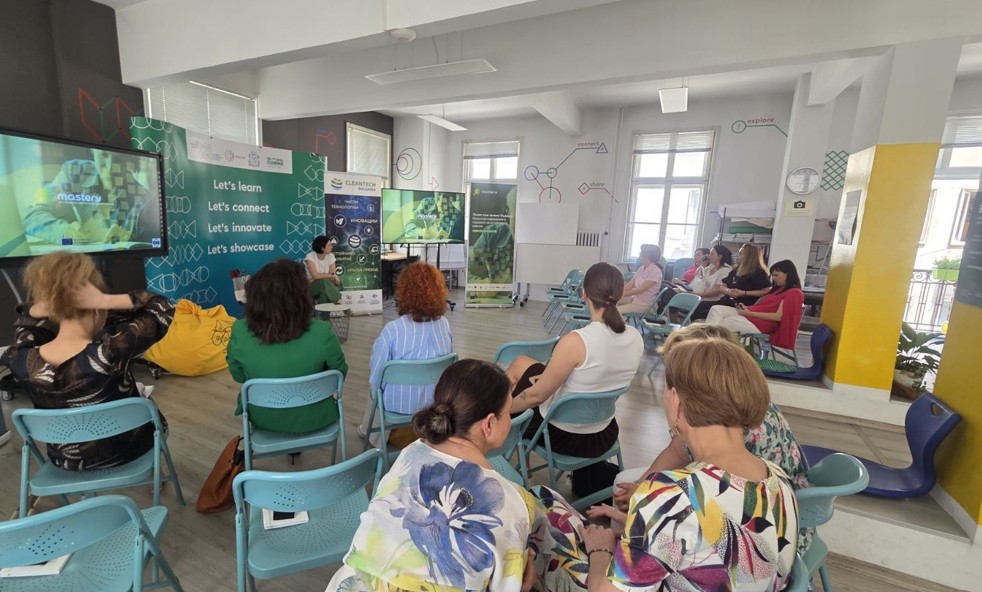
MASTERY Work Package 5 is already producing its first concrete results. During spring 2026, project partners CTBG and KRIB organised three Kick-start Workshops in Bulgaria, bringing together representatives from vocational education and training, public institutions, employers and industry organisations.
The workshops aimed to explore how micro-credentials can support green skills development, lifelong learning and workforce transformation in Bulgaria. Following the MASTERY methodology, participants worked collaboratively to identify national priorities, assess implementation challenges and develop practical recommendations for the future adoption of micro-credentials.
The first workshop, held on 31 March 2026, focused on building a shared understanding of the MASTERY approach and the European framework for micro-credentials. Participants discussed their potential to support upskilling and reskilling for the green economy and reflected on the importance of involving a wide range of stakeholders in the development of trusted and high-quality learning opportunities.
The second workshop, organised on 20 April 2026, translated the European methodology into the Bulgarian context. Stakeholders reviewed three priority areas for the country: developing measurable and transparent micro-credentials, ensuring their relevance to labour market needs and increasing awareness of their value for lifelong learning. Participants assessed the current situation, identified barriers and drivers, and proposed ideas for national implementation.
The third and final workshop took place on 15 June 2026 and focused on defining a roadmap for implementation. Participants highlighted the need for stronger policy support, a clearer regulatory framework, closer cooperation between education providers, industry and public authorities, and greater understanding of digital credentials.
The discussions also pointed to the importance of combining bottom-up and top-down action. Industry can play a key role by identifying priority professions in which micro-credentials could be tested, while public authorities can create the legislative conditions needed for their wider roll-out.
The three workshops demonstrated the value of structured dialogue between education providers, employers, policymakers and industry representatives. Their outcomes will contribute directly to the MASTERY policy recommendations and support the wider adoption of flexible, high-quality learning opportunities that respond to the evolving needs of the green economy.
This represents an important first step in the implementation of WP5 and in transforming the results of the MASTERY project into practical recommendations at national and European level.