
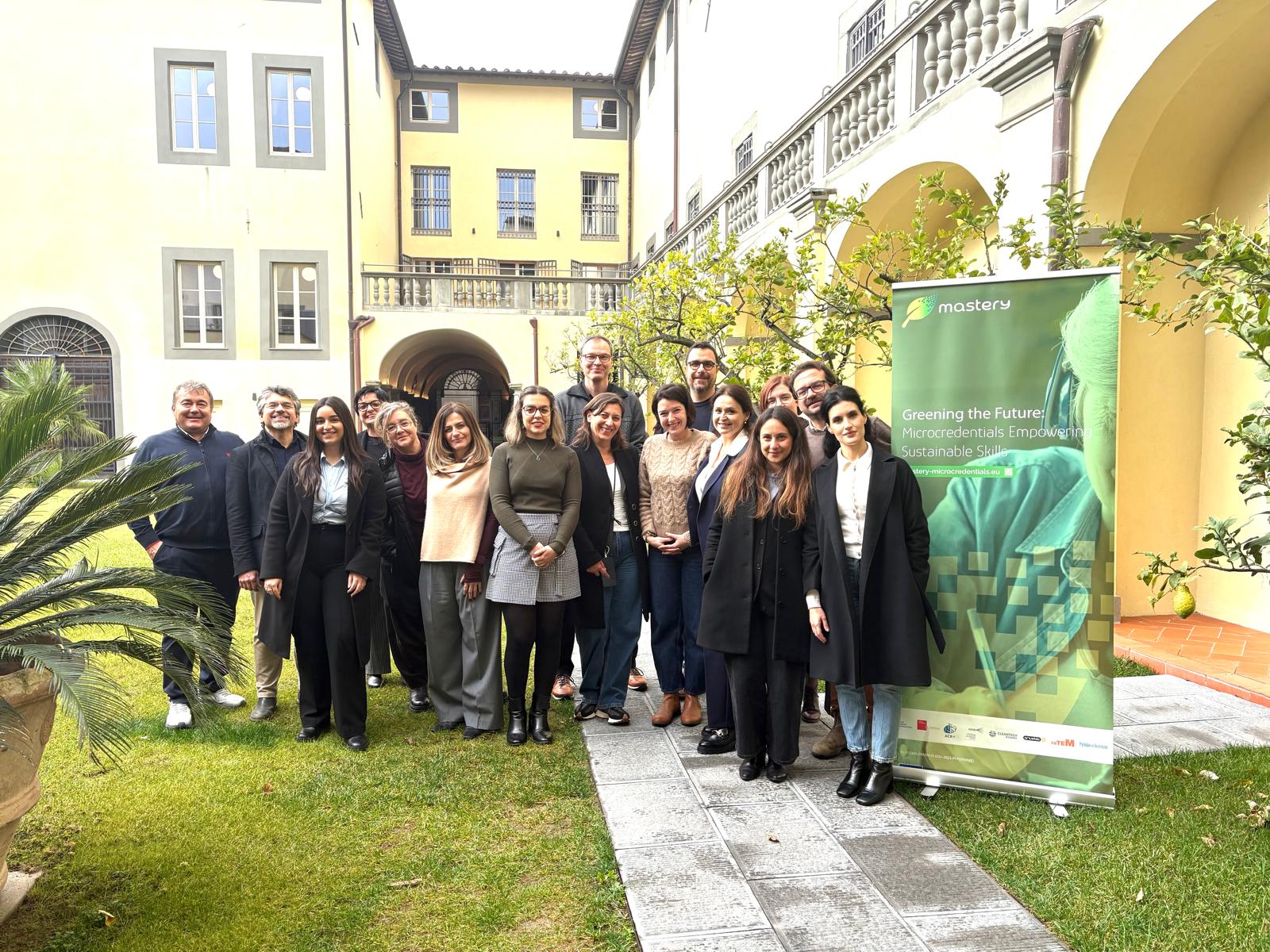
On 15th and 16th January, the Scuola Superiore Sant’Anna hosted the fifth MASTERY project meeting in Pisa, Italy. The meeting focused on analysing the main results obtained to date and following up on the conclusions related to ecological skills and knowledge needs in the sector targeted by the project. As well as co-creating the MASTERY micro-credential policy methodology.
During the meeting, some aspects related to the monitoring and progress of the project were addressed, such as the key lines for the development of workshops composed of experts of various kinds in each of the countries that form part of the consortium. The main bases for the development of pilots for the implementation of the micro-credential courses developed by the consortium were also addressed.
Furthermore, the progress of digital solutions aligned with EU recommendations and MASTERY policy, which underpin the methodology for the development and testing of the project’s micro-credentials, was reviewed. In this context, the progress made by the partners was analysed, as well as the next steps for their implementation and validation.
A highlight of the meeting was the presentation of the CERES project by Federica Acerbi, representing the Politecnico di Milano, and Claudio Sassanelli, representing the Politecnico di Bari. CERES is a European project focused on developing circular economy skills through innovative training programmes and digital tools, connecting education, businesses and professionals, strengthening collaboration and accelerating the ecological transition in different productive sectors. This connection between the two projects contributes to the promotion of new, renewed training programmes based on purely digital tools.
The MASTERY project is progressing towards its objectives. The partners continue to design the implementation of the pilot courses created throughout the project and are moving towards the organisation of a series of workshops with specialists from which sufficient conclusions can be drawn to propose policy-oriented guidelines that reflect the objectives of the MASTERY project.
